
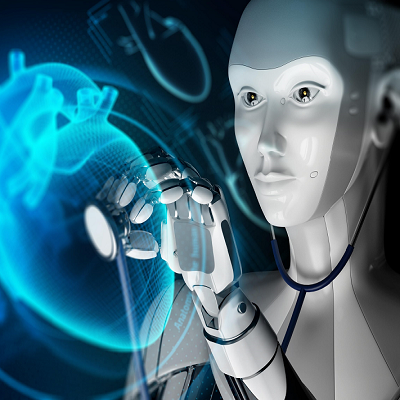
Artificial Intelligence (AI) has transitioned from being a concept in science fiction to an integral part of modern healthcare. In just the last decade, AI systems have begun to influence how diseases are diagnosed, treatments are planned, and patients are monitored. From predictive analytics that forecast patient deterioration to algorithms that read medical images with near-human accuracy, AI is transforming healthcare delivery.
While the excitement surrounding AI is high, the true measure of its success lies in its ability to improve clinical outcomes — better survival rates, faster recovery, fewer complications, and enhanced quality of life for patients. The question today is not whether AI will shape the future of healthcare, but how it will do so in ways that benefit patients, healthcare providers, and health systems alike.
1. AI as a Diagnostic Powerhouse
Among the many uses of AI, its potential in assisting medical diagnosis stands out as especially promising. AI algorithms can analyse vast amounts of medical data — images, lab results, electronic health records (EHRs) — to detect patterns that might be invisible to the human eye.
Examples and Impact on Clinical Outcomes:
Radiology: AI-powered image recognition tools can identify early-stage cancers, fractures, or lung abnormalities more quickly and accurately than traditional methods. Early detection means earlier treatment, which significantly improves survival rates.
Pathology: Digital pathology combined with AI allows for faster and more consistent interpretation of biopsies, reducing the chances of misdiagnosis.
Primary Care: AI-driven symptom checkers can triage patients, ensuring urgent cases receive timely attention.
Outcome Benefit: Early and accurate diagnosis translates into more targeted treatment plans, reduced disease progression, and improved recovery rates.
2. Precision Medicine and Personalised Care
Traditional medicine often follows a one-size-fits-all model, but patients are not all alike. Genetics, lifestyle, and environmental factors mean two people with the same diagnosis may respond very differently to the same treatment. AI enables precision medicine, tailoring interventions to the individual.
Key Advances:
AI algorithms analyse genetic profiles to identify which cancer therapy will be most effective for a specific patient.
Predictive analytics anticipate how a patient might respond to a certain medication, reducing trial-and-error prescribing.
Machine learning models combine patient history, lifestyle data, and clinical guidelines to generate a highly customised care plan.
Outcome Benefit: By personalising treatment, AI increases the likelihood of positive treatment responses, reduces adverse drug reactions, and improves overall patient satisfaction.
3. Predictive Analytics and Preventive Care
Preventive healthcare is often more effective and less costly than reactive treatment. AI can sift through years of patient data to identify those at high risk for certain conditions, enabling interventions before problems become severe.
Real-World Examples:
AI models predict hospital readmissions, prompting proactive post-discharge care.
Wearable devices powered by AI detect subtle changes in heart rhythm or glucose levels, alerting patients and clinicians before a crisis occurs.
AI-based population health tools identify communities at risk of outbreaks or chronic disease spikes, guiding public health interventions.
Outcome Benefit: Prevention reduces the incidence of acute medical events, lowers hospitalisation rates, and improves long-term health metrics.
4. Clinical Decision Support Systems (CDSS)
AI-based Clinical Decision Support Systems act as a co-pilot for healthcare providers. By integrating real-time patient data with medical literature, CDSS offers recommendations during diagnosis and treatment.
How It Works:
A physician enters patient symptoms, lab results, and imaging data.
The AI system cross-references this with thousands of similar cases and up-to-date research.
It presents a shortlist of possible diagnoses or treatment options, highlighting the most evidence-backed ones.
Outcome Benefit: Reduces diagnostic errors, ensures adherence to best practices, and speeds up the decision-making process — all leading to better patient outcomes.
5. Surgical Precision with AI and Robotics
AI-powered surgical robots are assisting surgeons in performing complex procedures with unprecedented precision. These systems can analyse intraoperative data in real-time, guiding surgeons with millimeter accuracy.
Impact:
- Shorter operation times.
- Reduced blood loss and smaller incisions.
- Lower infection risks and faster post-operative recovery.
Outcome Benefit: Patients experience fewer complications, shorter hospital stays, and better surgical success rates.
6. AI in Remote Patient Monitoring and Telehealth
The COVID-19 pandemic accelerated the adoption of telemedicine, but AI is taking remote care to the next level. Through wearable sensors, AI can continuously monitor patient vitals and alert healthcare providers to any concerning changes.
Example: A heart failure patient’s wearable detects fluid retention patterns and alerts the care team before hospitalisation is needed.
Outcome Benefit: Continuous monitoring leads to early intervention, reduced emergency visits, and improved quality of life for patients with chronic conditions.
7. AI for Operational Efficiency and Resource Management
Beyond direct patient care, AI improves hospital operations. Machine learning algorithms optimise staff schedules, predict equipment maintenance needs, and streamline patient flow through emergency departments.
Outcome Benefit: Reduced waiting times, better allocation of medical staff, and less strain on healthcare infrastructure — indirectly boosting patient outcomes.
8. Ethical Considerations and Challenges
While AI offers enormous promise, its integration into healthcare comes with challenges:
Data Privacy: Ensuring patient information is protected.
Bias in Algorithms: AI systems trained on non-representative datasets may yield unequal outcomes across populations.
Regulatory Approval: AI medical tools must meet stringent safety and efficacy standards.
Trust and Adoption: Clinicians must be trained to use AI confidently without over-reliance.
Addressing these challenges is essential for AI to fully realise its potential in improving clinical outcomes.
9. The Future Landscape
Looking ahead, the future of AI in healthcare is expected to involve:Fully integrated AI health assistants embedded in EHR systems.
Real-time global health monitoring through interconnected devices.
AI-driven drug discovery is accelerating the creation of life-saving medications
- Fully integrated AI health assistants embedded in EHR systems.
- Real-time global health monitoring through interconnected devices.
- AI-driven drug discovery is accelerating the creation of life-saving medications
Hybrid care teams where AI handles data-heavy tasks while clinicians focus on empathy, complex decision-making, and patient relationships.
Conclusion
Rather than replacing healthcare professionals, AI is enhancing their capabilities and supporting their work. By enabling faster, more accurate diagnoses, personalised treatment plans, predictive care, and operational efficiency, AI is already shaping a new era of medicine. The true measure of AI’s success will not be in its sophistication but in its impact on patient lives.
In the era of AI, the best clinical outcomes will be achieved when technology and human expertise work in harmony — delivering healthcare that is not just smarter, but also more compassionate, accessible, and effective.