
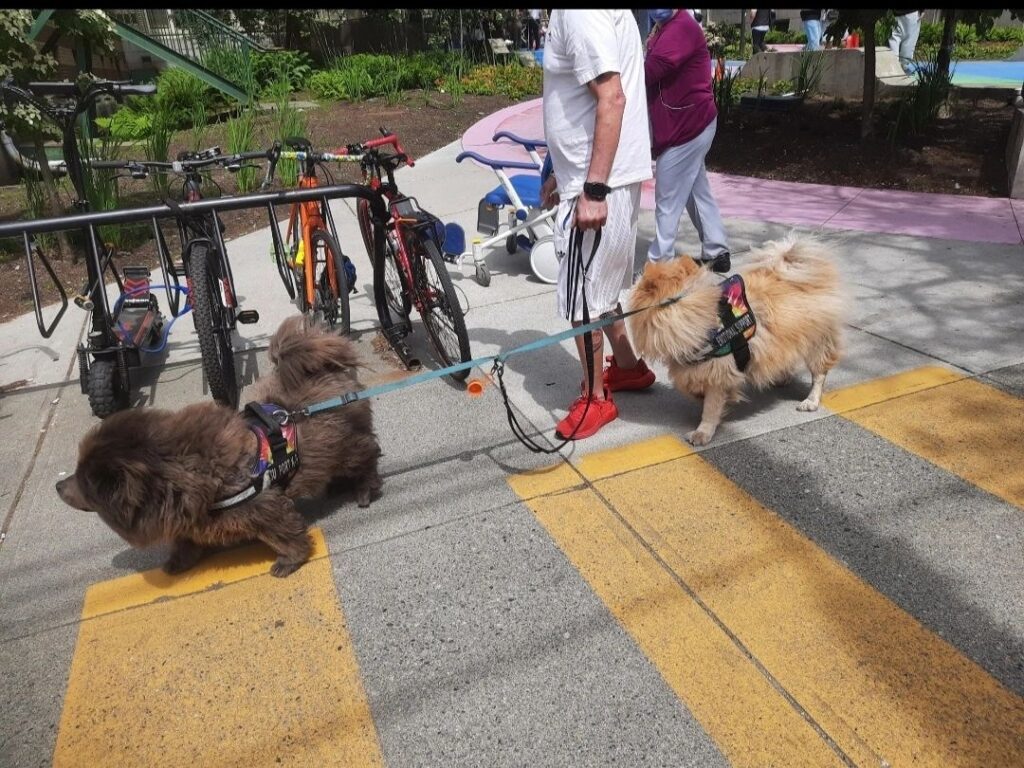
Healing Paws at St. Paul’s Hospital: How Therapy Dogs Bring Comfort and Speed Recovery
In the heart of Vancouver, St. Paul’s Hospital stands tall—not just as a healthcare institution, but as a sanctuary of compassionate, holistic care. Though nestled within a heritage structure, its systems and practices are remarkably forward-thinking, placing patient well-being at the center of everything. One such initiative that truly touched me during my recent visit was the use of therapy dogs—gentle, furry healers who play an extraordinary role in recovery.
These specially trained dogs aren’t just visitors. They’re part of the care team. Moving from ward to ward, they bring with them a quiet strength, reducing patient anxiety, offering emotional comfort, and even helping alleviate physical pain. Their presence bridges the gap between medicine and empathy, reminding us that healing isn’t always clinical—sometimes, it’s warm, wagging, and full of heart.
Testimonies from patients speak louder than metrics. As featured on the hospital’s site, one heart surgery patient shared, “When Daisy the dog came in, I suddenly felt lighter and less anxious.” A young cancer patient noted, “For a few minutes, I forgot everything. It felt like happiness walked into the room.” And an elderly resident said it best: “The building may be old, but the love here is always new—especially when the dog visits.”
Scientific research backs these moments. Studies have shown that interactions with therapy dogs lower cortisol (the stress hormone), increase oxytocin (the bonding hormone), and boost emotional resilience—leading to improved recovery outcomes. Interestingly, even the hospital staff benefit, finding emotional relief amidst their demanding routines.
St. Paul’s commitment to holistic healing—addressing not just the body but also the mind and spirit—is deeply inspiring. And it made me wonder: Could Indian healthcare also integrate such models, provided all safety protocols, including infection control, are met? Or perhaps, therapy dogs could become part of end-of-life care protocols, where patients who express the wish could be comforted in their final days by a gentle, loving companion?
A simple idea can transform how we care.
As a healthcare leader, I believe in the power of innovation rooted in empathy. My visit to St. Paul’s reaffirmed that healing is not just a science—it’s an art. And sometimes, the most profound medicine walks in on four paws, with a tail wagging and a soul full of love.
Let’s reimagine care—one gentle paw at a time.